
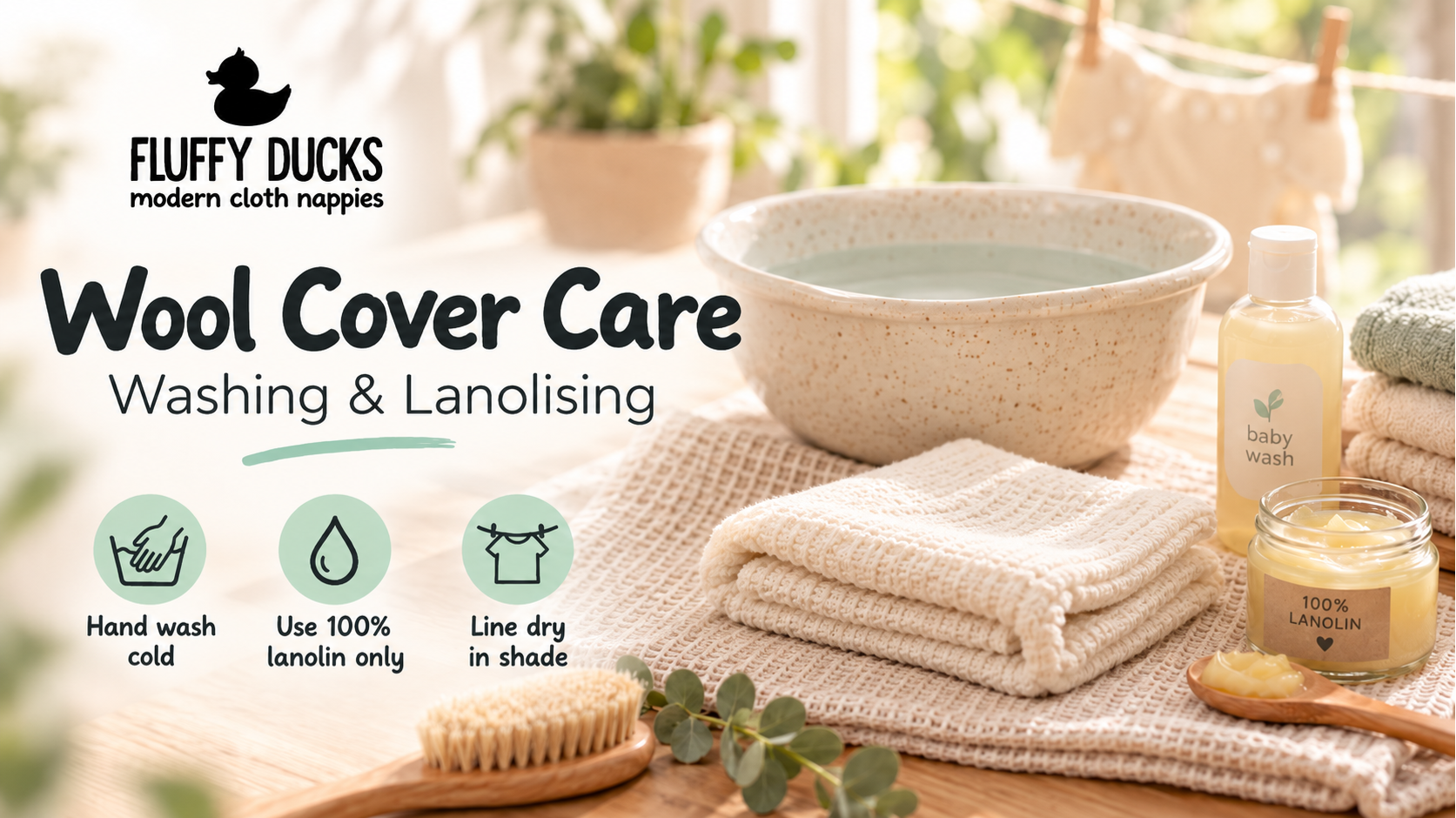
Wool Cover Care

How to Lanolise a Wool Cover

Back to Learning Hub

6 Oct 2026

How to Lanolise a Wool Cover

Please ensure you wash your wool cover before use and prior to lanolising, no need to dry in between. 

Use 100% Lanolin only.

Washing

Disana wool covers should be hand washed in cold water using a wool detergent.

Lanolising

  • Mix a good pea size (1/2tsp) of lanolin in 1/2 cup boiling water with a little squirt of baby/body wash to help emulsify. 

  • Stir until mixture is combined (it may turn milky)

  • Add mixture to a about a litre (depending on size of cover) of luke warm water and mix to combine

  • Turn wool cover inside out and submerge, move around to get even distribution of the mixture

  • Leave for about 1.5/2hrs to absorb the liquid

  • Gently squeeze out excess water (do not wring) and line dry in shade

  • Wash and lanolise every 3-4 weeks unless soiled.

 Pro Tips

  • Turn cover back the right way, pop between two towels and roll up.

Good to know

Common cloth nappy questions

Quick, expert answers to the questions parents ask most about using, washing and caring for reusable cloth nappies.

How often should I wash cloth nappies?

Most families wash every one to three days. Don't let dirty nappies sit longer than about two to three days before washing, to avoid staining and odour. Store used nappies in a dry, breathable pail or bag until wash day.

What is the best wash routine for cloth nappies?

A reliable routine is a cold rinse or short pre-wash to clear the bulk, followed by a warm main wash with a full dose of detergent. Load the machine well but not so tightly that nappies can't agitate, and flick solids into the toilet first.

Can I tumble dry cloth nappies?

Absorbent inserts like bamboo can usually be tumble dried on low, but waterproof covers and PUL outers last longer line dried or air dried. Sun drying also helps lift stains naturally. Check each product's care label.

How do I deep clean or strip cloth nappies?

If clean nappies start to smell or lose absorbency, they may need an occasional deep clean to remove detergent or mineral build-up. This is maintenance, not part of the regular routine, use a recognised strip-wash method suited to your water type.