
6 Oct 2026
Prepping your new nappies
We know how exciting it is to receive fluff mail and wanting to use them immediately but for better performance soak your new nappy inserts overnight in cold water to increase absorbency. Change more frequently until maximum absorbency is reached, around 8 washes. Note that if you're using from birth, soaking isn't necessary.
Wash all parts of your nappy once before use in warm water.
Basic washing routine
Dealing with Dirty Nappies/Dry Pail
Use a dry pail with holes for aeration, the more holes the better. The open-air flow helps reduce ammonia smells and pro-long the life of your nappies.
Pee nappies can be placed straight into your dry pail.
Remove solids in the toilet, most simply shake/roll off or you can use a dedicated poo brush. Rinse under hot water. You can pre-treat stains if desired. Then dry pail.
Night nappies (or nappies that have been in use for longer than 5 hours) require a separate, thorough hand-rinse in hot water with detergent as soon as you possibly can, due to the increased ammonia concentration and volume. Then dry pail as normal.
Wash
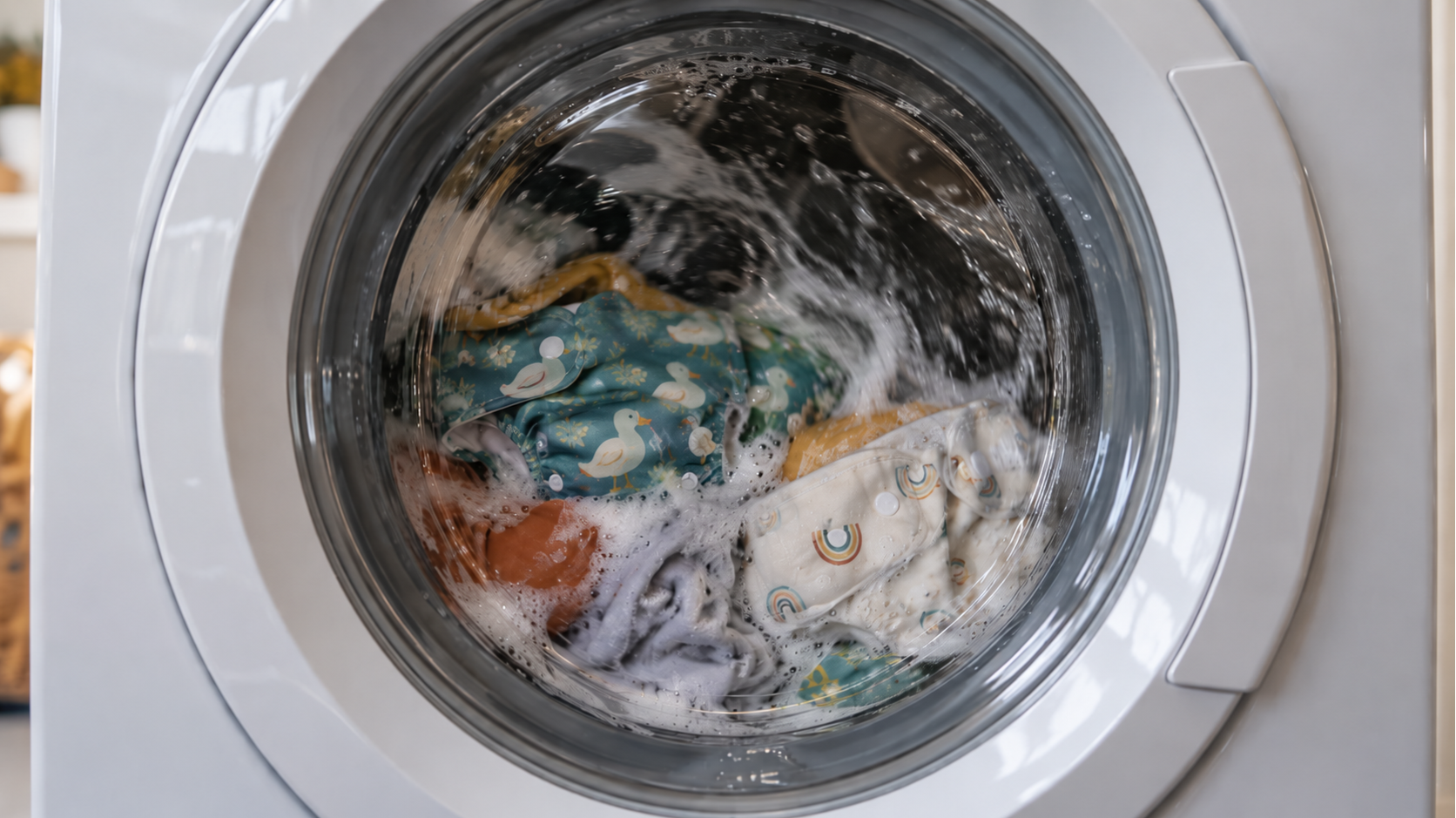
Prewash your nappies - a short warm rinse cycle with half the detergent recommended to remove heavy soil or excess urine prior to main wash. This allows the main wash to be done in clean water. Prewash should be done every day where possible and returned to the dry pail until the main wash.
Main Wash - use the longest cycle on your machine at 40°C - 60°C (MAX 60°C) with the full dose of detergent for a heavily soiled load, do not spin covers over 1000RPM, inserts however can be spun at your highest spin (1200RPM) DO NOT use bleach/vinegar or fabric softeners.
Dry
We recommend Line drying as its economical and environmentally friendly.
Always hang your nappy shells sideways, pegging the front and back to ensure the elastics are not being stretched during drying.
Hang covers/shells in the shade, or indoors.
If line drying isn’t possible, use the dryer for the inserts only, no need to tumble dry the shells as they dry so quickly.
Extensive dryer use will make the nappies a little thinner over time in the same way it does your clothes.
Detergent
We recommend Persil at Fluffy Ducks, its readily available, personally tested and always good results. But any good mainstream detergent should be sufficient.
Please note eco detergents require boosting with vanish or something similar.
Preparing for storage
If you intent to store your Fluffy Ducks for a length of time, we recommend a minimum of a bleach sanitise before they are stored, and recommend ensuring they are stored in a dry environment. Incorrect storage preparation can lead to residual ammonia which can degrade materials, especially elastics. We highly recommend checking out CCN to ensure you have suitable preparation. Please reach out for some guidance on either CCN or the group Facebook page for this specialised cleaning.
A last note, your nappies will thank you for being treated with a little TLC, remember they are re-usable not indestructible.